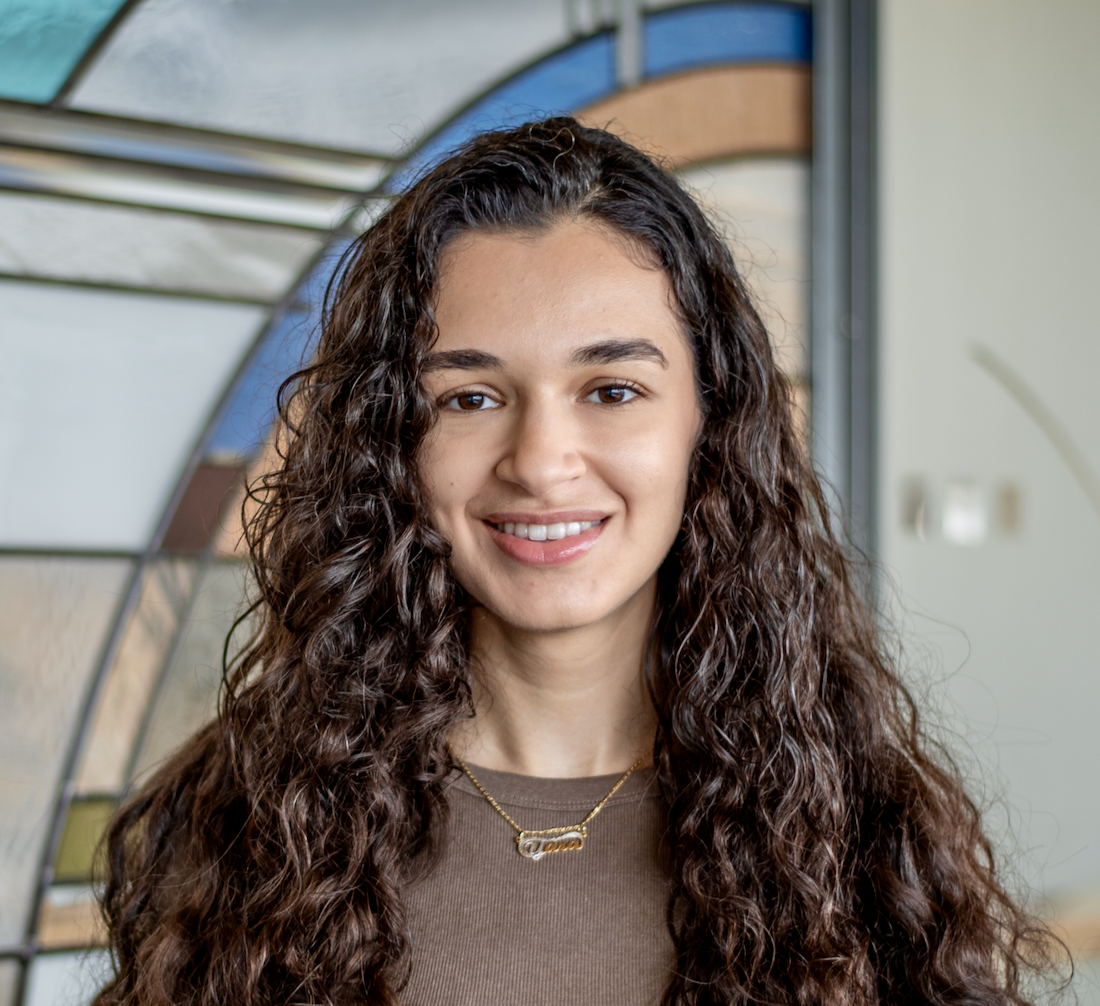
About Me
I graduated from the University of Michigan in 2020 with a B.S. in Computer Science and
Biopsychology, Cognition, and Neuroscience. After graduating, I worked as a software engineer at
Microsoft, first on Azure and later on a research incubation team developing healthcare technology.
I returned to the University of Michigan for graduate school and am now pursuing my PhD in Computer
Science.
My work combines computational and human-centered approaches. I'm interested in how AI systems can
model complex human states, and in how people understand, interpret, and interact with the
representations those systems produce, as well as with the systems themselves. I am particularly
interested in the intersection of AI and mental health, and in how we can design systems that are
useful, understandable, and ethical.
My Research
Human Centered Passive Monitoring
I study how people experience passive mental health monitoring in everyday life. In a recent
longitudinal study, I examined how people with bipolar disorder made sense of six months of
ambient-audio monitoring, including how they interpreted their data, provided context that
monitoring systems could not capture, and navigated questions around privacy, control, and
bystanders.
This work motivates broader questions about when intelligent systems should involve users in
interpreting, correcting, or supplementing computational representations of their experiences.
Speech, Affect, and Mental Health
I also study how speech and affective signals can be used to understand changes in mental health
over
time. My current work uses longitudinal ambient speech, self-report, and clinical assessments to
investigate relationships between everyday behavior, emotion, and symptoms of bipolar disorder.
I'm
particularly interested in within-person variation, and understanding how models can account for
individual differences in behavior and emotion.
Emotion Modeling
Another line of my work examines the relationship between computational representations of
emotion
and people's own reports of their emotional experiences. My recent work has studied the
generalizability of emotion models trained on third-party annotations to self-reported emotion,
as
well as questions around variability and reliability in emotion annotation.
Selected Publications
What You Feel Is Not What They See: On Predicting Self-Reported
Emotion from Third-Party Observer Labels
Yara El-Tawil, Aneesha Sampath, Emily Mower Provost
IEEE International Conference on Acoustics, Speech and Signal
Processing (ICASSP), 2026
Paper
Rethinking Emotion Annotations in the Era of Large Language Models
Minxue Niu, Yara El-Tawil, Amrit Romana,
Emily Mower Provost
IEEE Transactions on Affective Computing, 2025
Paper
The Whole Is Bigger Than the Sum of Its Parts:
Modeling Individual Annotators to Capture Emotional Variability
James Tavernor, Yara El-Tawil, Emily Mower Provost
Interspeech, 2024
Paper
View all publications on Google Scholar →